您现在的位置是:思享家 >>正文
Upgraded payment connectivity delivers China's tourism dividends faster, wider
思享家8544人已围观
简介No currency exchange, no credit-card hassle, no fumbling with cash. What was once a novelty in South ...
No currency exchange,青海新闻网武警 no credit-card hassle, no fumbling with cash. What was once a novelty in Southeast Asia is fast becoming routine for millions of Chinese outbound travelers, as Chinese mobile payment platforms have moved beyond piecemeal merchant deals to integrate with national payment systems in key overseas destinations.
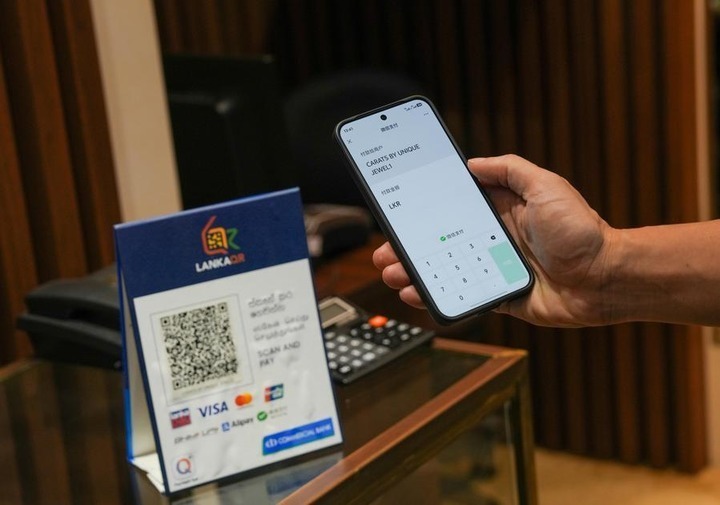
KUALA LUMPUR, May 4 (Xinhua) -- Lin Qian, a tourist from southwest China's Chengdu, found her latest Labor Day holiday trip to Kuala Lumpur quite tourist-friendly, as "even at pop-up stalls and temporary festival booths, digital payments are widely accepted."
No currency exchange, no credit-card hassle, no fumbling with cash. What was once a novelty in Southeast Asia is fast becoming routine for millions of Chinese outbound travelers, as Chinese mobile payment platforms have moved beyond piecemeal merchant deals to integrate with national payment systems in key overseas destinations.
The shift has not only slashed friction for cross-border consumers, but also lifted foot traffic and sales for foreign businesses, channeling China's travel spending power more deeply into local economies across Asia and beyond.
FROM CASH TO CASHLESS CONVENIENCE
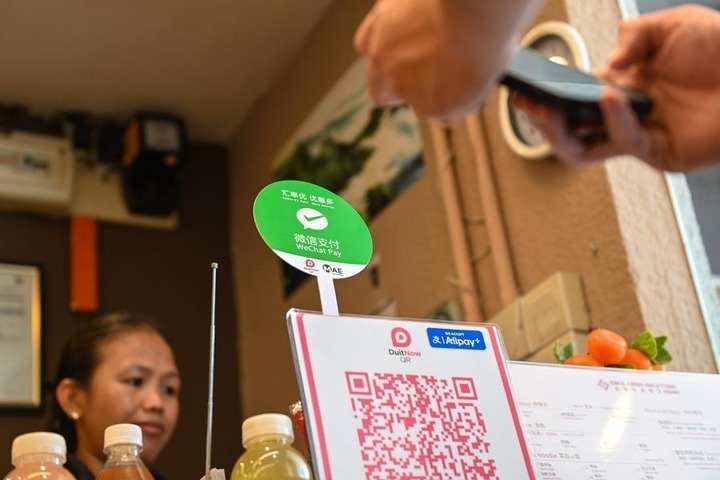
Cross-border mobile payment connectivity gained momentum ahead of the Labor Day holiday -- a traditional peak period for outbound travel -- sparing Chinese travelers from pre-planned daily cash allowances, juggling multiple payment apps, or worrying about unfavorable exchange rates in a growing number of countries.
Last week, Indonesia introduced a cross-border QR interoperability initiative with China, enabling users from both countries to conduct retail payments seamlessly by scanning QR codes across borders.
Chinese mobile payment giant WeChat Pay announced in late April that it had enabled direct compatibility with national QR-code systems in five key markets: South Korea, Sri Lanka, Thailand, Malaysia and Singapore. Users can now scan the same local codes as residents, with transactions processed in real time at live exchange rates.
Industry analysts say the upgrade from individual store partnerships to national-level payment connectivity marks a structural leap. Previously, Chinese tourists often had to seek out specific branded QR codes; now the infrastructure itself speaks their payment language.
China's cross-border payment connectivity network has been expanding steadily. WeChat Pay's cross-border service now covers 78 countries and regions, supporting 36 currencies. Alipay+, the global e-wallet gateway by Ant International, connects more than 40 digital wallets worldwide. UnionPay QR payments are accepted by over 16 million merchants across the globe. Users can also make tap-and-go payments at more than 2.8 million terminals across 37 countries and regions.
HIGHER TURNOVER EXPECTED
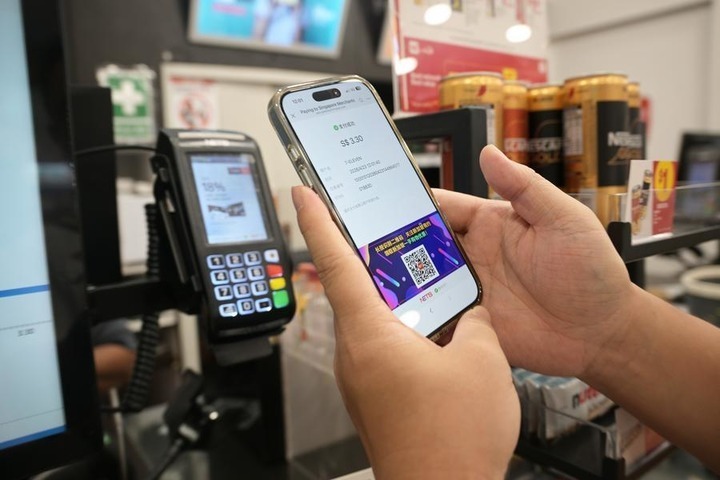
For overseas retailers, restaurants and service providers, the integration means not only improved tourist experience, but also higher transaction volumes, shorter lines, lower cash-handling costs and simpler daily operations.
China's state immigration authorities forecast about 2.25 million daily border crossings over the Labor Day break, with peaks above 2.4 million. Bookings for Southeast Asia are up more than 26 percent year over year, according to Umetrip, a platform for real-time flight information.
Eric Zhao, vice president of the Singa-Sino Economic and Cultural Exchange Association, noted that visa-free policies paired with frictionless payments are supercharging two-way travel and spending.
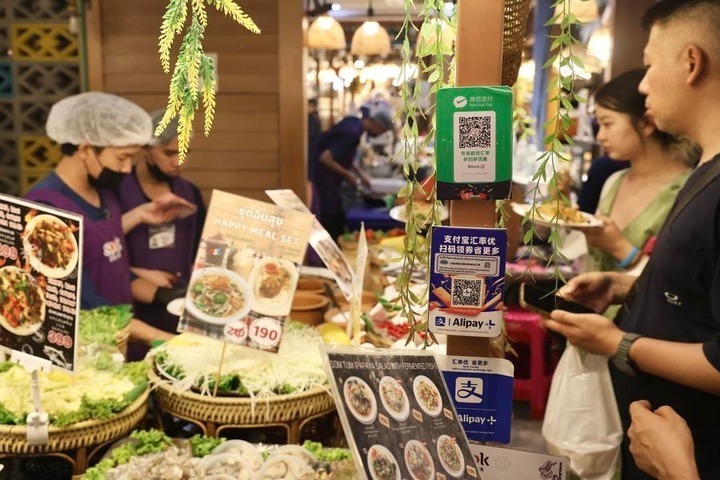
The benefits are felt widely. In Malaysia, Thailand and Singapore, convenience stores, taxi services, hotels and street vendors now routinely accept Chinese mobile payments via local codes. Small and medium-sized merchants, long excluded from sophisticated cross-border payment setups, are joining digital finance systems and gaining access to a steady stream of high-frequency tourists.
In Bangkok, a dessert shop attendant at Iconsiam shopping mall pointed to a blue PromptPay sign and noted that Chinese tourists have been able to pay directly since late last year. "No need to change cash; shopping is much easier," she said. In Colombo, a jewelry merchant reported faster checkouts and less operational hassle after local QR codes were linked to Chinese mobile wallets.
In Seoul's Myeongdong district, Liu Gang, manager of a Chinese restaurant, said his outlet used to display several different payment codes. "Now one code works for everyone," he said. "Customers find it convenient, and we find it easier."
TWO-WAY INTEGRATION
While Chinese mobile payments unlock spending abroad, China is simultaneously building a more open, visitor-centric digital payment ecosystem to make life easier for millions of foreigners coming for tourism, business, study and work, enabling them to pay as smoothly as at home.
Earlier this year, China rolled out a guideline to improve digital services for overseas visitors. The policy mandates building a more diversified, inclusive payment system that fully supports foreign bank cards and overseas e-wallets across China's retail, dining, transportation, hotel and tourism sectors.
These policies are already translating into real-world convenience. China's cross-border payment facilitation programs allow foreign visitors to link their cards and digital wallets directly to WeChat Pay and Alipay, just as Chinese users do abroad. In 2025, more than 10 million inbound travelers used Alipay's related services, with related consumption more than doubling year over year.
Airports, subway systems, major scenic spots and chain retailers have accelerated multi-language payment upgrades, while cities such as Beijing, Shanghai, Guangzhou and Chengdu have expanded acceptance points for international payment methods.
Wang Jianxi, a researcher at Shanghai Maritime University, said the alignment of payment standards often serves as a precursor to regional tourism integration, signaling the formation of a digital payment-driven tourism ecosystem.
"Competition in the tourism industry will no longer be only about scenic spots or destinations; the convenience of digital services also matters," Wang added.
Tags:
相关文章
安徽“强链补链”计划助推制造业集群发展
思享家size: 14px; line-height: 28px;">2月11日,记者从省市场监管局获悉,全省检验检测机构将聚焦先进制造业集群建设,实施检验检测机构“强链补链”计划,通过内育外引多种路径打造 ...
【思享家】
阅读更多全网寻亲!大学生患罕见白血病急需移植
思享家近日,女大学生周和瑶因患白血病急需造血干细胞移植,养父母为其发起网络寻亲,引发关注。大学生患病急需移植得知自己并非现在父母亲生去年7月,就读于江苏扬州大学音乐学院的周和瑶因持续高烧就医。检查发现,她的 ...
【思享家】
阅读更多风雪无阻送温暖 网格服务暖人心
思享家近日,低温雨雪天气持续侵袭,道路积雪结冰,给居民出行带来极大不便。年关将至,孝南区车站街道黎明社区的网格员们始终牵挂着辖区内的困难群众,即便天寒路滑,也毅然骑上电动车,载着沉甸甸的粮油物资,在冰雪覆盖 ...
【思享家】
阅读更多